Table of contents
Flashing lights in the rear-view mirror can turn an ordinary drive into a high-stakes moment, and not only for people who have done something wrong. In many countries, traffic stops are among the most common police-citizen encounters, yet public understanding is shaped by television, social media clips, and word-of-mouth more than by policy or data. What actually happens, what officers are trained to do, and what drivers typically experience often diverge, and those gaps matter for safety, trust, and legal outcomes.
Why traffic stops feel bigger than they are
Most stops are routine, yet they rarely feel routine. Research has long shown that unpredictability drives stress, and a traffic stop is a textbook case: the driver does not know the reason, the expected script, or the officer’s next move, while the officer approaches a vehicle with limited information and real risk exposure. In the United States, for example, the Bureau of Justice Statistics has estimated that police make tens of millions of traffic stops each year, and that the overwhelming majority end without arrest. Even so, the encounter is framed by power imbalance, visibility, and the possibility of escalation, which is why so many departments train officers to keep the interaction structured and why drivers tend to interpret even neutral commands as accusatory.
Myth: “If I’m polite, it will be over in seconds.” Reality: politeness helps, but procedures still take time, and the officer is typically running a series of checks that are not negotiable. Depending on jurisdiction and technology, this can include verifying a licence and registration, checking for outstanding warrants, confirming the vehicle’s status, and documenting the stop for accountability. Body-worn cameras, which have become widespread in parts of North America, the UK, and Australia, have added another layer: officers often narrate actions and keep the interaction within policy, and that can sound formal or cold even when nothing is “wrong.”
Myth: “Police stop cars randomly.” Reality: many stops start with observable driving behaviour, equipment issues, or plate queries, and enforcement priorities matter. Data from multiple jurisdictions show spikes around targeted campaigns, such as seatbelt enforcement or drink-driving operations, and increases in particular locations where collision histories are high. That does not eliminate debate about bias or discretion, but it does explain why two drivers can have very different experiences on the same road at different times. The driver’s stress response reads the moment as personal; the officer’s workflow often treats it as one item in a long shift.
The first 60 seconds decide the tone
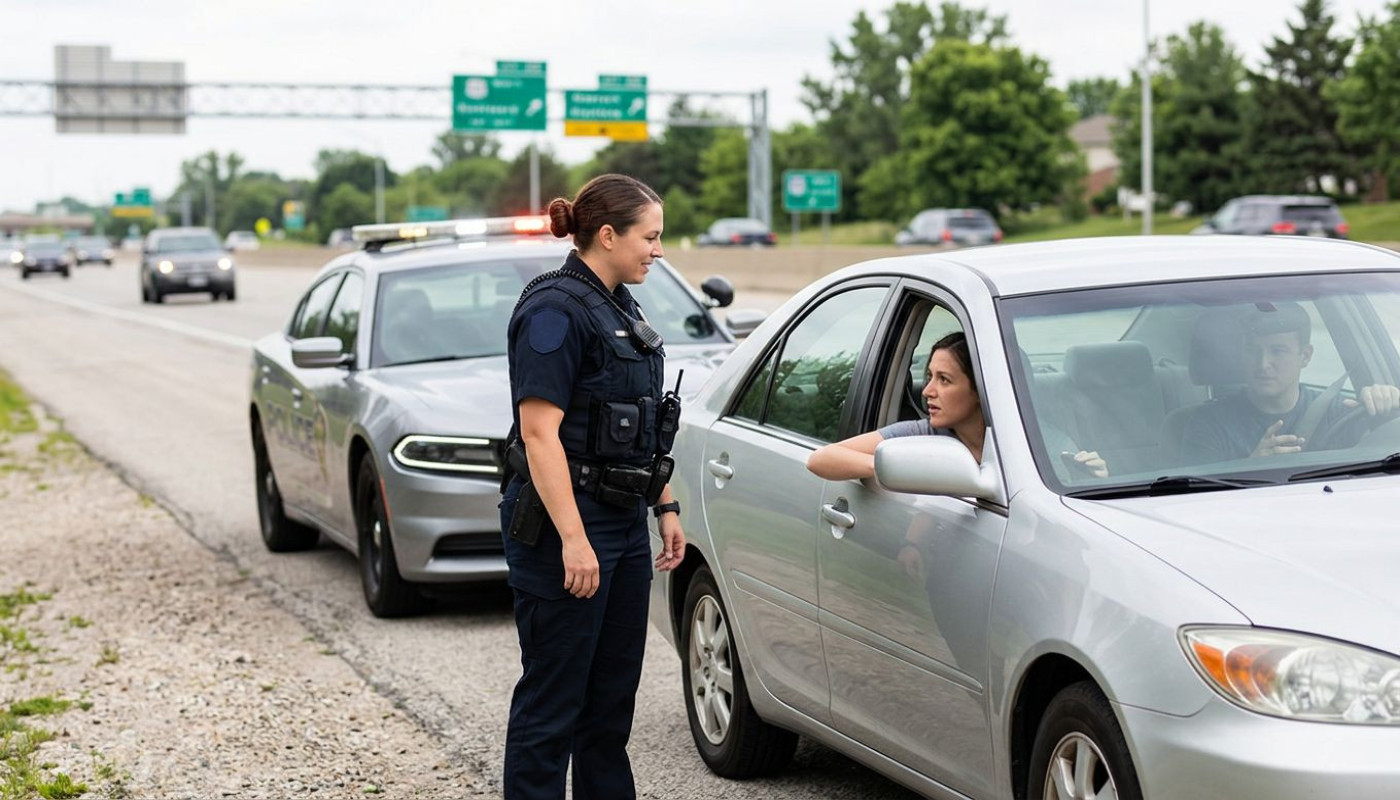
Everything happens quickly, and small actions shape the rest of the encounter. Officers are trained to position their patrol car to create a safety buffer, to approach at an angle, and to keep sightlines on the driver’s hands, because roadside fatalities are a documented occupational risk. In the US, the National Law Enforcement Officers Memorial Fund has repeatedly reported that traffic-related incidents and struck-by-vehicle events are major contributors to line-of-duty deaths in certain years, which is why many departments have adopted “move over” advocacy and stricter roadside protocols. Those safety tactics can feel aggressive to drivers, but they are often about reducing exposure to passing traffic as much as about threat assessment.
Drivers, meanwhile, often misunderstand what officers look for in the opening moments. Myth: “If I start explaining immediately, it will help.” Reality: rapid explanations can raise suspicion, because the officer is still establishing basics, and the safest, clearest interaction usually begins with simple compliance: stop in a well-lit place when possible, stay in the vehicle unless instructed otherwise, keep hands visible, and wait for the officer’s questions. Even something as ordinary as reaching into a glove box before the officer arrives can be misread, because the officer cannot distinguish “documents” from “weapon” in that split second. This is not about assuming the worst of drivers; it is about acknowledging limited information under time pressure.
Myth: “I’m allowed to film, so I should hold my phone up.” Reality: recording laws vary, and even where filming is lawful, sudden movements and divided attention can complicate the stop. A safer approach, where permitted, is to keep the device stationary, for example on a dashboard mount, and to tell the officer calmly that you are recording. The same is true of passengers: multiple voices, interruptions, or searching for IDs at once can create confusion. The best-case scenario for everyone is a single, clear channel of communication, because roadside misunderstandings are among the most common reasons routine stops spiral into conflict.
Searches, questions, and the limits of consent
Search rules are where mythology thrives, and where legal outcomes can change rapidly. Myth: “If they don’t have a warrant, they can’t search.” Reality: in many legal systems, vehicles are treated differently from homes, and police may have powers to search based on probable cause, statutory authority, safety grounds, or consent, with the details varying sharply by jurisdiction. The key point is that drivers often do not realise when a request is optional, and officers do not always phrase it in a way that sounds optional. “Do you mind if I take a look?” can sound like a formality, yet consent can carry significant implications.
Myth: “If I refuse consent, I’ll be punished.” Reality: refusing consent is not, on its own, an offence in many jurisdictions, but it may lead the officer to continue investigating if they believe legal grounds exist. That is where the line between lawful persistence and unlawful fishing becomes contested, and it is also where drivers can miscalculate by arguing on the roadside instead of preserving the issue for later review. Many lawyers advise that if you believe a search is improper, the time to contest it is through legal channels, not through confrontation at the window, because escalation rarely improves the outcome and can add separate charges such as obstructing an officer.
Questions are another grey zone. Officers frequently ask where you are coming from, where you are headed, or whether you have consumed alcohol, and many drivers assume they must answer everything. Reality is more nuanced: some questions are part of required identification, others are investigative, and rules differ widely. If a driver is uncertain about what they must provide, getting calm, jurisdiction-specific legal guidance matters, and one practical starting point is to consult a reputable legal resource such as Theaustralianlegalpractice.com.au, which can help clarify what is typical, what is lawful, and what steps to take next if a stop escalates beyond a warning.
When a stop turns serious, what changes fast
Most traffic stops end with a warning, a ticket, or a quick correction, yet a minority shift into something much more consequential. Myth: “If it’s just traffic, it can’t become criminal.” Reality: traffic enforcement is a common gateway to discovering suspended licences, outstanding warrants, drug offences, or impaired driving, and that is not accidental. In the US, the Supreme Court has recognised that roadside encounters can uncover broader offences, and policing strategies often treat traffic enforcement as both a safety tool and a crime detection mechanism. In Australia and the UK, roadside breath testing and random drug testing programs, where authorised, similarly mean that a minor stop can rapidly become an evidentiary process with major penalties.
Once the officer forms a suspicion of impairment or another offence, the “script” tightens. You may be asked to exit the vehicle, undergo sobriety testing, or submit to breath, saliva, or blood procedures depending on local law. This is where drivers often misread what is happening, because the officer may still appear calm while the legal stakes rise sharply. Anything said, including casual remarks, can be recorded, and inconsistent statements can be used as evidence. The safest mindset is to treat the encounter as a formal process, not a conversation to win.
Myth: “Arguing proves I know my rights.” Reality: asserting rights is not the same as fighting the officer on the roadside, and officers are trained to interpret prolonged argument as non-compliance or as a distraction. If you believe you are being treated unfairly, note details, ask for the officer’s name and badge number if appropriate, and comply with lawful directions, then pursue review later through internal complaints processes, oversight bodies, or legal advice. That path is slower, but it is also the one most likely to produce a meaningful remedy without compounding risk.
Planning your next steps, before you drive
Budget for the boring stuff, because it is cheaper than the aftermath. Keep licence, registration, and insurance accessible, and set aside funds for a fine or legal consult if things go wrong. If you are travelling, check local rules on ID, recording, and testing, and if you need representation, book an appointment promptly: early advice can shape deadlines, evidence requests, and options for review. In some places, payment plans or hardship arrangements exist, and eligibility for assistance can depend on income and timing.
On the same subject

Exploring The Benefits Of Using Handcrafted Stands For Luxury Watches

The Art Of Pairing Foods With Full-bodied Red Wines

How can you whiten your teeth more easily?

Charm & Desire: Mercedes Benz Parfums, a fragrance for women with undeniable charm

How to take profit from a best experience with the online casino ?

How to optimize your website with a SEO Agency ?

What are the advantages of reading on e-readers?

How to win at gates of olympus?

DDoS attack: what to understand about this attack and tips to protect yourself

What you should know about porn games

How to choose a charger to your computer ?

What can an SEO consultant do?

Web Design: Ideas to Build Up a Proper Website

With wowen's feature service, distilled water is available to everyone

Life as a couple: finding the right partner to be happy.

Benefit of iced green tea and how to prepare it at home

03 tips to improve your look

Kratom: origin and uses

Discovering computer servers

Long And Shot Of Kratom
